The tailoring logic of the cut is the foundation of slimming; the core lies in "snug, not tight." When customizing professional attire, prioritize ergonomic cuts and avoid designs that are too loose or tight. Overly loose cuts can make your figure look bulky, failing to outline your body and instead amplifying volume; Overly tight styles can expose body flaws and may even cause wrinkles due to fabric pulling, ruining the overall smoothness of the lines. The ideal slimming silhouette should achieve precise fits in key areas such as shoulders, waist, and hips, preserving room for movement while naturally shrinking with lines to create a sharp, tight visual effect.
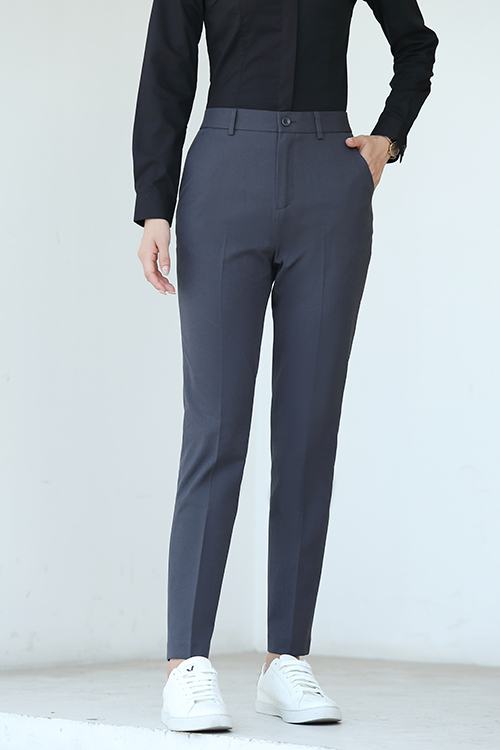
Waist treatment is the key breakthrough for slimming the silhouette. Whether it's a top or a suit, a clear waistline design effectively divides the upper and lower body proportions, elongates the legs, and makes the figure appear taller and more slender. During customization, designers can be asked to use a cinched waist cut or use invisible designs like belts or hidden buckles to enhance the waist curve. Even loose styles can be fine-tuned at the waist and achieved a tapered effect through later modifications. It's important to note that the waistline should not be too high or too low. Adjusting it naturally to your waistline can achieve a coordinated slimming effect.
The design of shoulder lines and sleeve shapes also affects the slimming effect. The shoulder line is the "skeleton" of professional attire. A suitable shoulder line makes the upper body look upright and sharp, avoiding the bulky feeling caused by a wide line or the cramped feeling caused by a narrow shoulder line. When customizing, choose natural shoulder or padded shoulder designs based on your shoulder shape, and balance the upper body proportions through moderate extension or contraction of the shoulder line. In terms of sleeve shape, straight-leg and slight flare sleeves can enhance arm lines, avoid overly puffy or flared sleeves, and reduce visual volume—especially suitable for those who want to enhance arm lines.
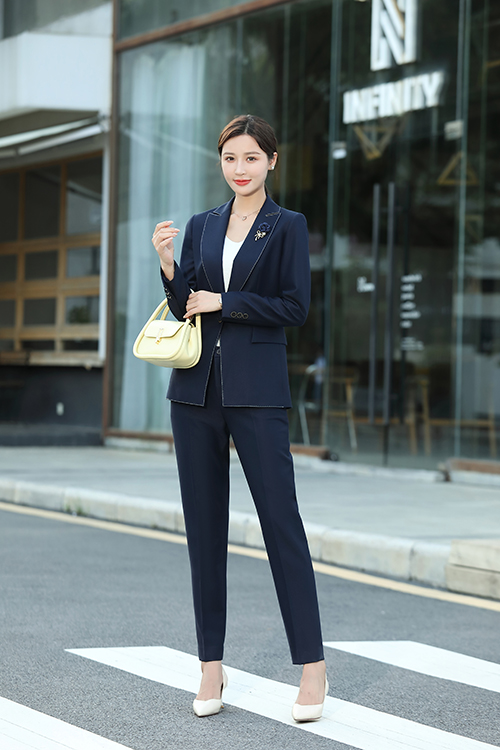
The combination of fabric and cut should not be overlooked. A slimming fit needs to be made from structured fabric with a drape, as these can better support the silhouette and prevent bulkiness caused by softness or sagging. At the same time, the texture of the fabric also affects the visual effect. Vertical stripes, fine checks, and other patterns can extend the visual line vertically, offering a slimming advantage over horizontal stripes or large patterns. During the custom process for Guangzhou professional attire, you can communicate with designers about fabric selection, select suitable materials based on fit characteristics, and achieve a slimming effect with less effort.
Additionally, overall proportional coordination is a core principle for slimming. When customizing professional attire, pay attention to the length of the top and bottom. The top should not be too long or too short, and the length of pants or skirt should be adjusted according to your height to avoid looking short or bulky due to imbalance. For example, a long top paired with high-waisted bottoms can elongate the legs; Knee-length skirts or cropped pants can expose the ankles, adding a sense of lightness. These details can make the overall silhouette more slimming.
The core advantage of Guangzhou professional wear customization lies in personalized adaptation. To choose a slimming silhouette, the key is to clearly define your body characteristics, communicate your needs thoroughly with the designer, and adjust around key elements such as fit, waistline, shoulder line, and proportions. There's no need to pursue complicated designs; a clean and neat cut with precise tailoring can achieve a slimming effect, making professional wear both appropriate and professional while highlighting body advantages, helping to upgrade your workplace image.